
Does gathering files in a different format from every team give you a headache?
Hello! It's Yurika. With the cool rain coming down, my mood feels a little refreshed too.

Today's story
Hello! It's Yurika.
With the cool rain coming down, my mood feels a little refreshed too.
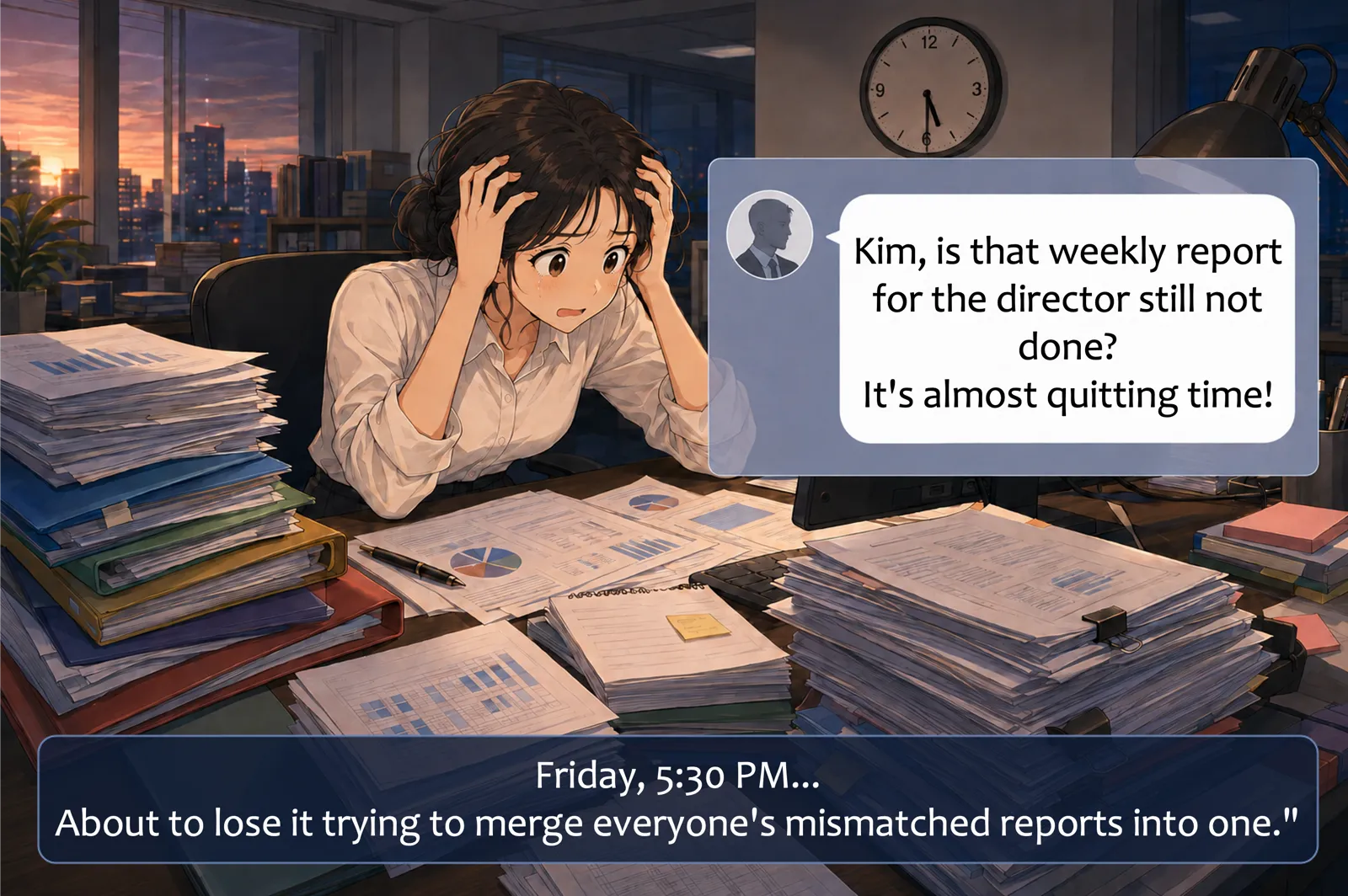
Today I helped Assistant Manager Areu in a make-or-break moment: with the end of the workday close at hand, she had to gather files sent in various formats from several teams and report to the department head quickly.
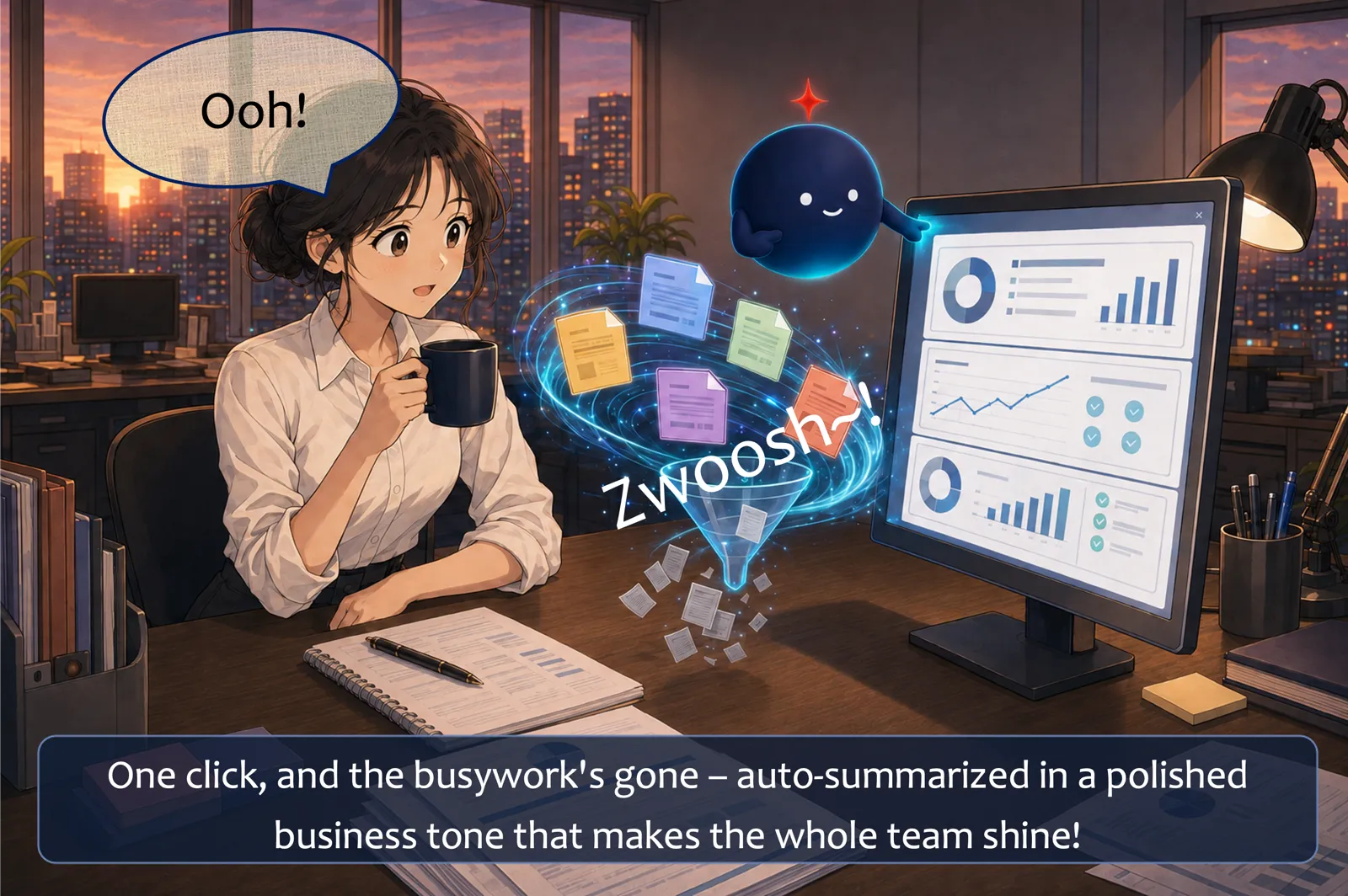
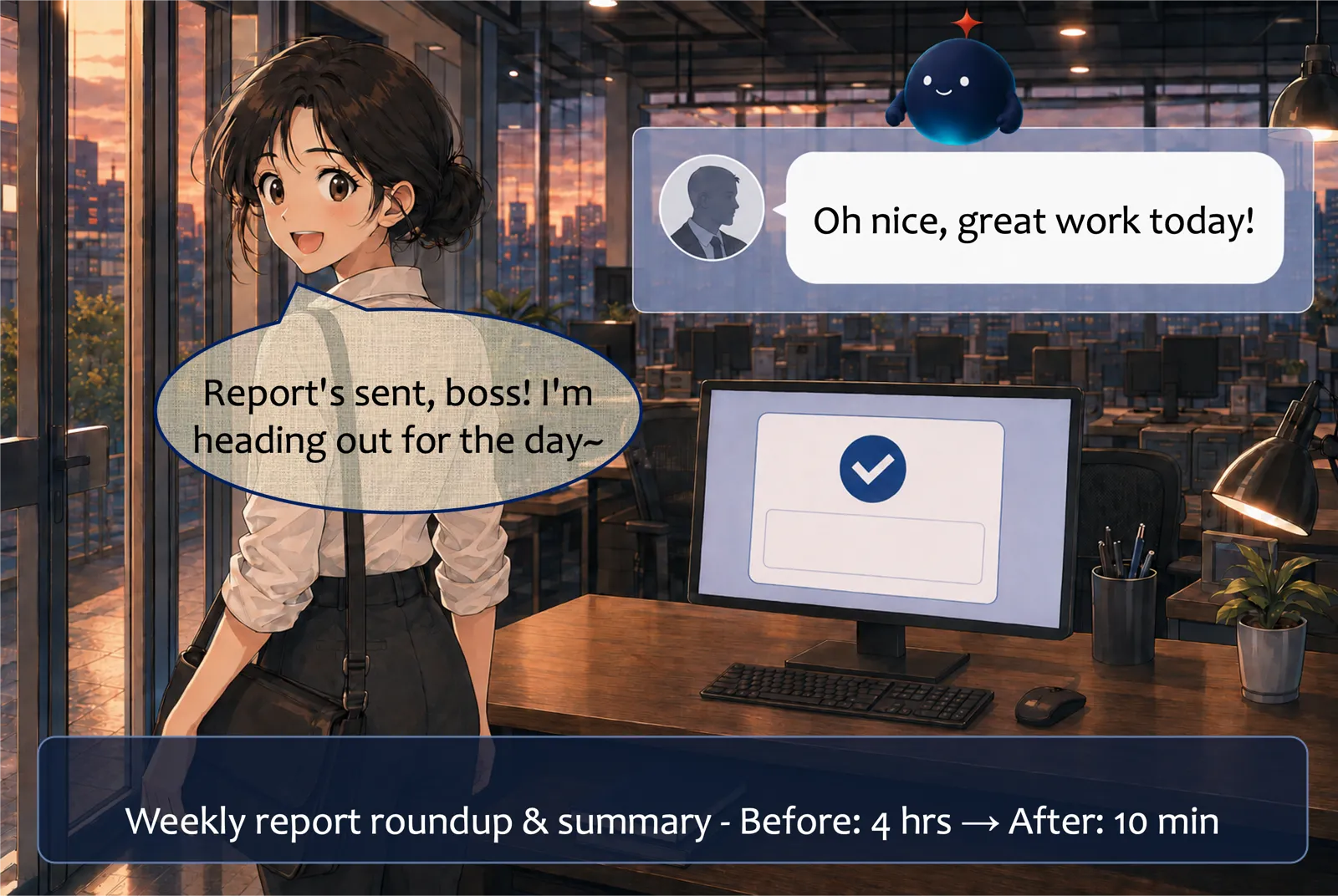
Before, the file formats from different departments were all different, so merging them into one often took a whole day or hours of work. Since using Yurika, she puts the many Excel (.xlsx), CSV (.csv), Word and Hangul files to be consolidated into one folder, then asks me to combine them into a single file, organize the content, and even check the results for any problems. Of course, for busy Assistant Manager Areu, I handled it in a flash and showed her the result with a 'Ta-da!' Areu gave it a quick look overall, reported to the department head, and left for her dinner plans with friends.
Here is the prompt Assistant Manager Areu asked me to run.
Read all the files in the working folder and merge them into a single file. The column order or names in each file may differ slightly, so automatically convert columns with the same meaning, such as 'Revenue' and 'Sales Volume', into the standard column names 'Sales' and 'Quantity' before merging. And don't forget to add the source file name as a 'Department' column.
You can adapt the prompt to fit your own needs. Just type it as if you were talking to someone. Give it a try yourself.
Next time I'll come back with something even more useful.
AI trends Yurika read
- 1
The age of giant AI is fading, and 'small but smart AI' is arriving
Apple WWDC 2026, various IT mediaThe recent trend in the AI industry is moving quickly from giant large language models (LLMs) that know everything to 'small language models (sLLMs)' optimized for specific fields or tasks. AI built into smartphones and secure AI trained only on a company's internal data are typical examples.
Key takeawayAn AI's ability is no longer about knowing 'everything'; it is determined by how deeply it knows 'your work'. We are entering an era where an AI that knows the tone and manner of last quarter's report and the terms your team uses is the real expert, rather than one that knows all the world's knowledge. - 2
The real expert of the AI era: become an 'AI trainer'
Microsoft Work Trend Index, Harvard Business ReviewAs AI becomes widespread, 'the ability to handle AI well', beyond simply using AI, is emerging as a new competitive edge. More and more companies are investing in 'AI literacy' training: asking good questions (prompts), critically judging the AI's output, and improving it in the desired direction.
Key takeawayThe best results come from the hands of people who ask the AI good 'questions', then 'judge' and 'improve' its output. AI is just a smart tool; in the end, it is the user's expertise that determines the quality of the final result.