
Dozens of pages of PDF? Don't read them — Yurika hands them back as a one-page summary
Last week, Assistant Manager Areu split his piled-up work into four baskets with Yurika. Today he opens the 'Creating documents' basket. But his desk…
Today's story
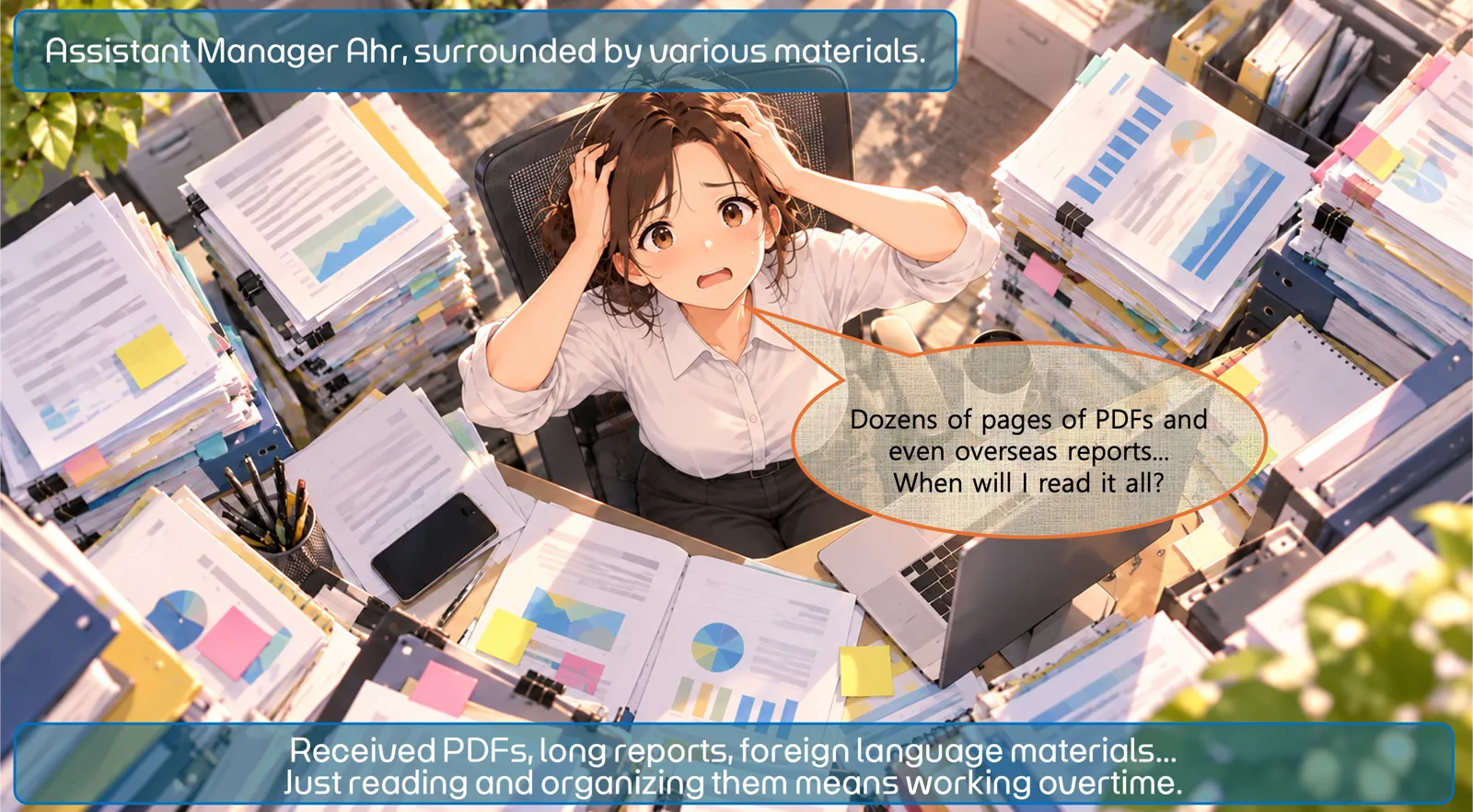
Last week, Assistant Manager Areu split his piled-up work into four baskets with Yurika. Today he opens the 'Creating documents' basket. But his desk is full of PDFs dozens of pages long, lengthy reports, and materials received from overseas.
“Dozens of pages of PDFs plus overseas reports... when will I ever read all this?”
To write a report, you have to read the materials first. Marking the important parts, translating the foreign-language content, and gathering information scattered here and there, half a day passes before you even get to write your own document.
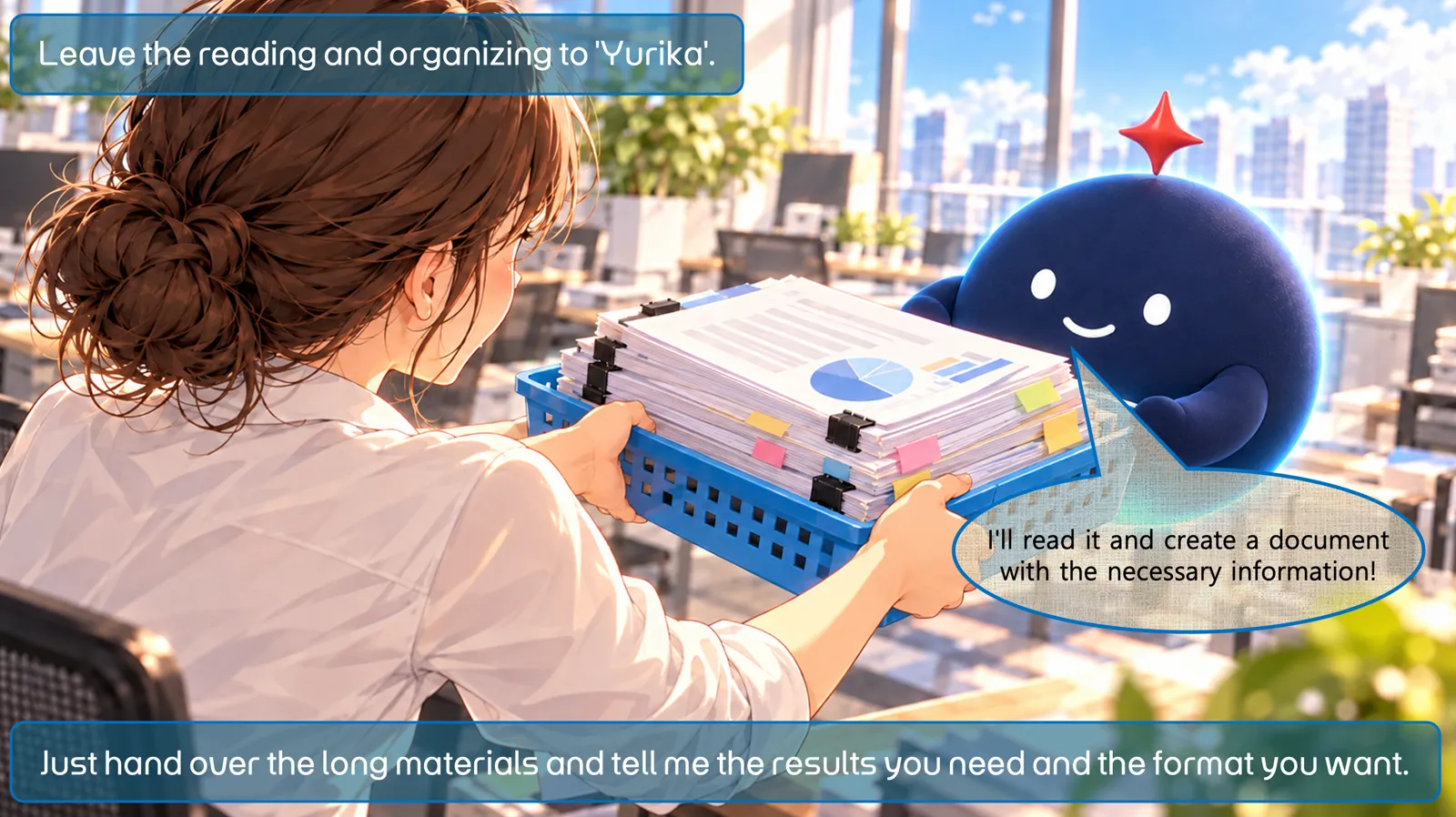
Then Yurika takes Areu's basket of materials.
“I'll read it and turn it into the document you need!”
Areu tells Yurika the result he wants along with the materials. Does he need a key summary to check before the meeting? A report in the company template? Or several materials organized together?
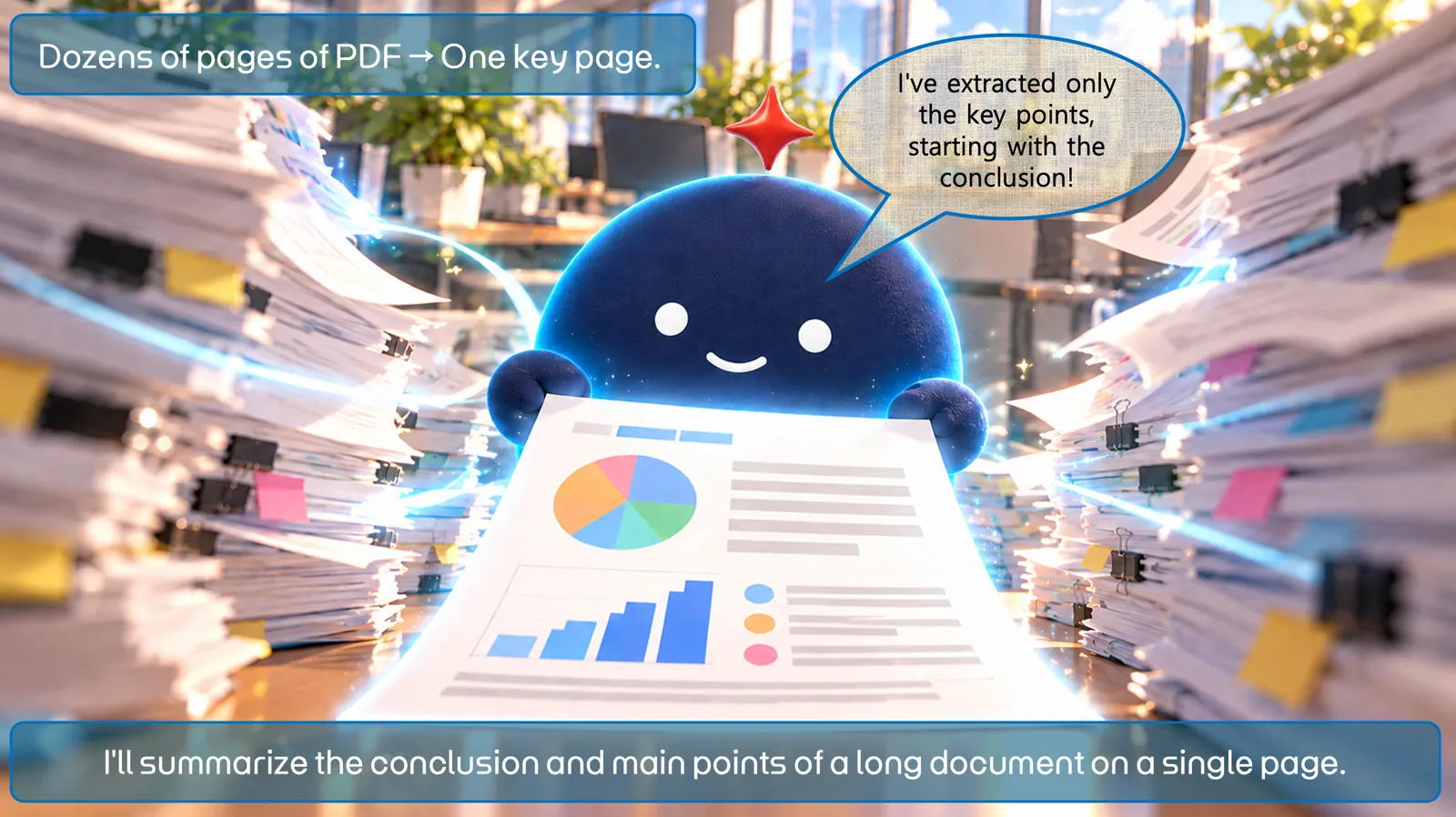
First, Yurika picks the conclusions and main points out of the long PDF and organizes them into a 'one-page key summary'. What used to mean flipping through the pages from start to finish to find things can now be seen at a glance.
“I pulled out just the key points, starting with the conclusion!”
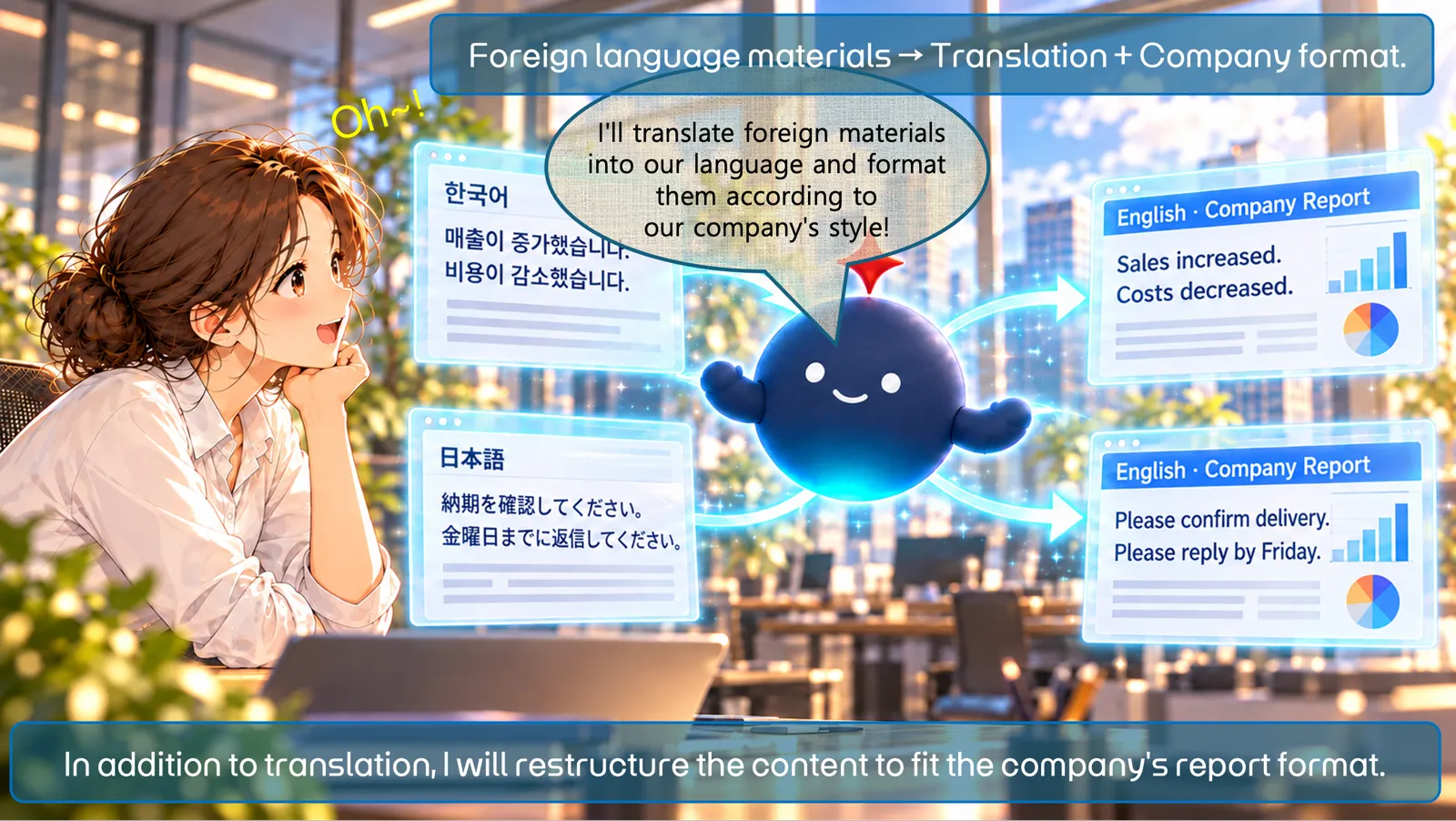
Overseas materials don't stop at translation either. Yurika translates content received in English or Japanese into Korean and restructures it to fit the company's reporting template. It even handles the work of copy-pasting translated sentences and fixing the formatting.
“I don't just translate, I organize it into your company's report!”
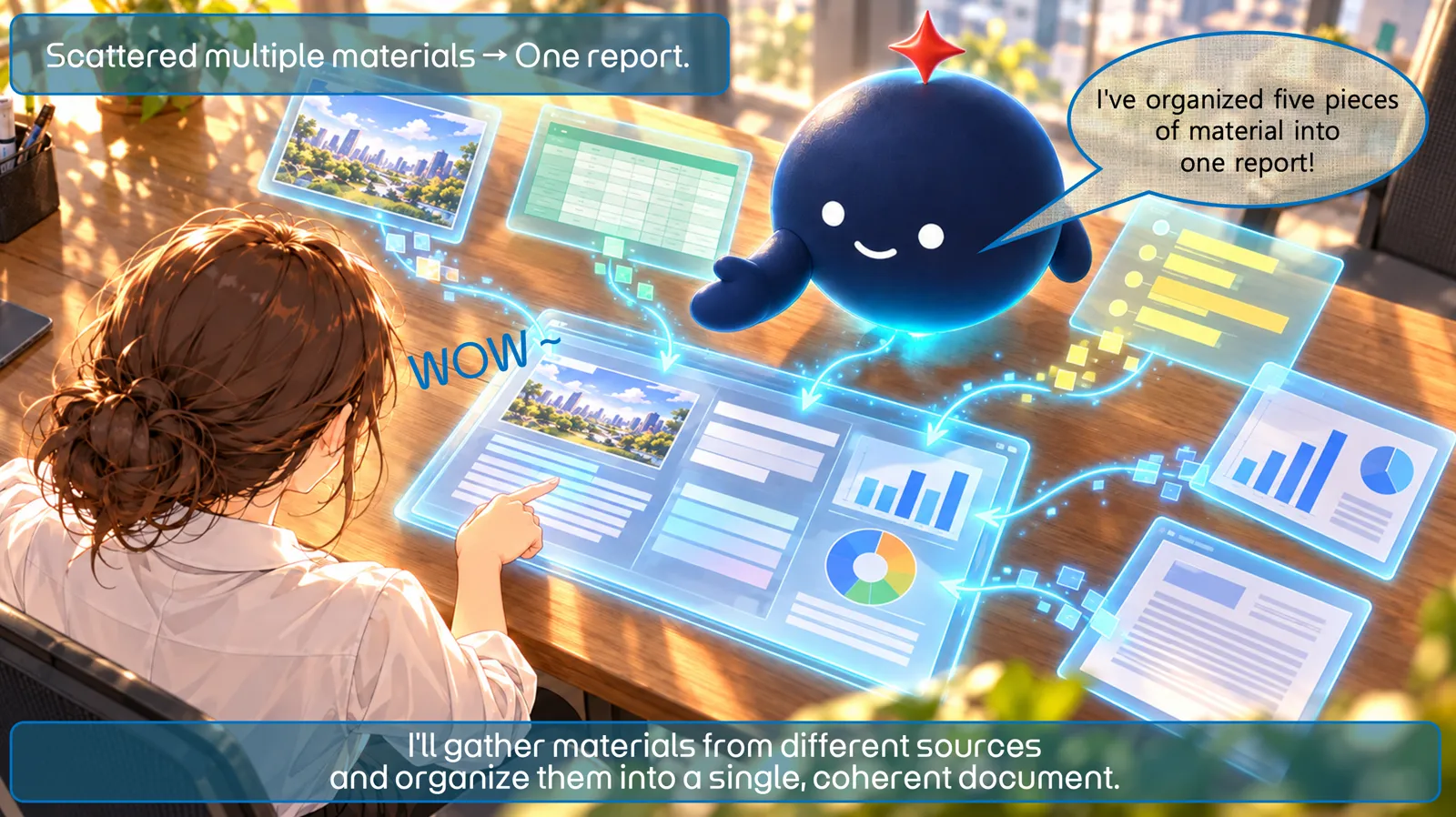
This time, materials with photos, tables, notes, graphs, and long reports unfold around Yurika as digital document windows. The content needed from each material gathers into a central report, and duplicated content is trimmed away as everything is organized into a single flow.
“I picked out what's needed from each material and wove it into one report!”
Now a report ready to read and review sits in front of Areu. The time once spent reading, translating, and organizing materials is reduced, leaving room to check the key points and decide the next action.
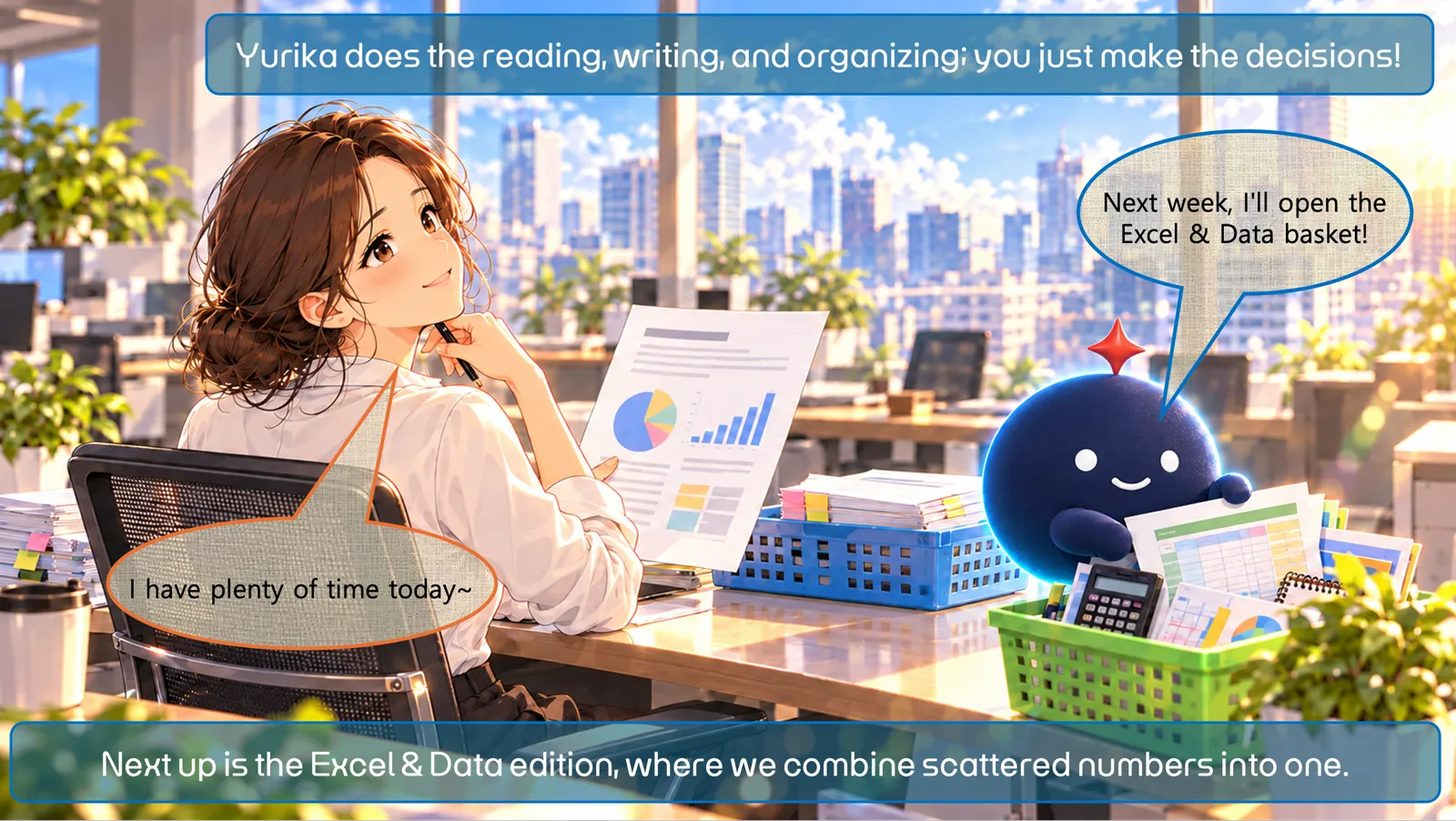
Reading, writing, and organizing are Yurika's. Checking the content and making the judgment are yours.
Next week, we open the 'Excel & data' basket. The story continues with gathering and organizing numbers scattered across multiple files into one.
AI trends Yurika read
- 1
AI agents move beyond 'adoption' to 'scaling' — the key is 'connecting' scattered tools
McKinsey & Company, The State of AI, 2026Past the stage of trying AI agents on one or two tasks, a rapidly growing number of companies are scaling them up and running them across many tasks. Global surveys also show that the share of companies that have scaled agents into real work rose sharply in a year (about 27% → 40%). But what decides success is not a 'smarter AI'; it's the integration capability to 'connect' scattered materials, tools, and tasks into one and blend them into real work flows. In fact, the biggest barrier to adoption was not performance but connection with existing systems and materials. This is also why Yurika handles document writing, reading materials, and repetitive work continuously from a single window.
Key takeawayYurika is an AI focused on exactly this 'connection'. Rather than uploading a single file and asking a one-off question, it handles the scattered materials, documents, and repetitive work in your working folder continuously from one window. From summarizing PDFs to translating foreign-language materials, combining multiple materials, and writing reports, Yurika connects it all into a single flow without making you hop between tools. Experience not a 'smarter AI' but an 'AI that connects well to my work' with Yurika.Read the source › - 2
In 2026, AI moves beyond a 'tool' to a 'colleague who works with you'
TechRadar Pro, 2026 (see Deloitte, State of AI in the Enterprise 2026)2026 is regarded as the year AI settles in as a 'digital colleague' that lives in everyday work, beyond a 'tool you ask once in a while'. As agents that remember context and handle multiple steps on their own increase, people are shifting from looking after every step to checking and judging results. Experts expect that before long, a considerable number of companies will have autonomous AI agents inside their workflows. Yurika also aims to be a colleague-type AI: 'hand it over, and it works on its own while you only check'.
Key takeawayYurika aims to be exactly that 'digital colleague'. Hand it over, and it reads the materials, organizes them, and even prepares the deliverable on its own, so you can focus only on checking and judging. Because it looks at the context of your working folder and keeps working without you explaining everything anew each time, you can redirect time spent on repetitive work to more important decisions. Share with Yurika the work you used to stay up all night doing alone.Read the source ›